About the Journal

Journal of Educational Technology and Arabic Learning (Jethal) is a platform for publishing research articles in the fields of educational technology and Arabic language pedagogy. The journal welcomes work that explores the intersection of digital innovation and Arabic instruction, advancing both theory and practice.

About the Journal
 
Journal Title : Journal of Educational Technology and Arabic Learning (JEThAL)
Editor-in-Chief : Yoke Suryadarma
Managing Editor : Agus Riyadi
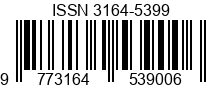
ISSN : [isi nomor ISSN jurnal]
DOI Prefix : [isi prefix DOI] by Crossref
Publisher : CV. Kayaswara, Indonesia
Indexing : Google Scholar, Crossref, Dimensions, Portal ISSN
Frequency : 2 issues per year (June & December)
Open Access : Yes — fully open access under CC BY 4.0
Scope — Educational Technology
 
1
Artificial Intelligence in Education
Applications of AI and machine learning to support teaching and learning.
2
Educational Policy in TEL
Policies and governance shaping technology-enhanced learning.
3
Digital Learning Environments
Online, blended, and virtual platforms that mediate learning.
4
Gamification
Game elements and mechanics that boost engagement and motivation.
5
Instructional Media Development
Design and production of digital learning media and resources.
 
Scope — Arabic Language Pedagogy
 
1
Arabic Curriculum Design
Development and evaluation of Arabic curricula and materials.
2
Arabic Pedagogy
Theory and practice of teaching Arabic as a first or foreign language.
3
Teaching Methods & Strategies
Instructional approaches and classroom strategies for Arabic.
4
Assessment Practices
Evaluation, testing, and measurement of Arabic language learning.
Types of Articles
 
1
Empirical Articles
Studies grounded in original data, experiments, or field research.
2
Conceptual Articles
Theoretical or review articles advancing ideas and frameworks.
Selection & Review
Articles may be empirical or conceptual. Selection for publication undergoes a blind peer-review process conducted by the editorial board and reviewers, considering each article's relevance and contribution to the advancement of knowledge, professions, and practices in educational technology and Arabic instruction, while ensuring strict compliance with scientific publication standards.